
Laboratories
Where D.Pharm students learn to prepare, test and identify medicines with their own hands, under the eye of their teachers.
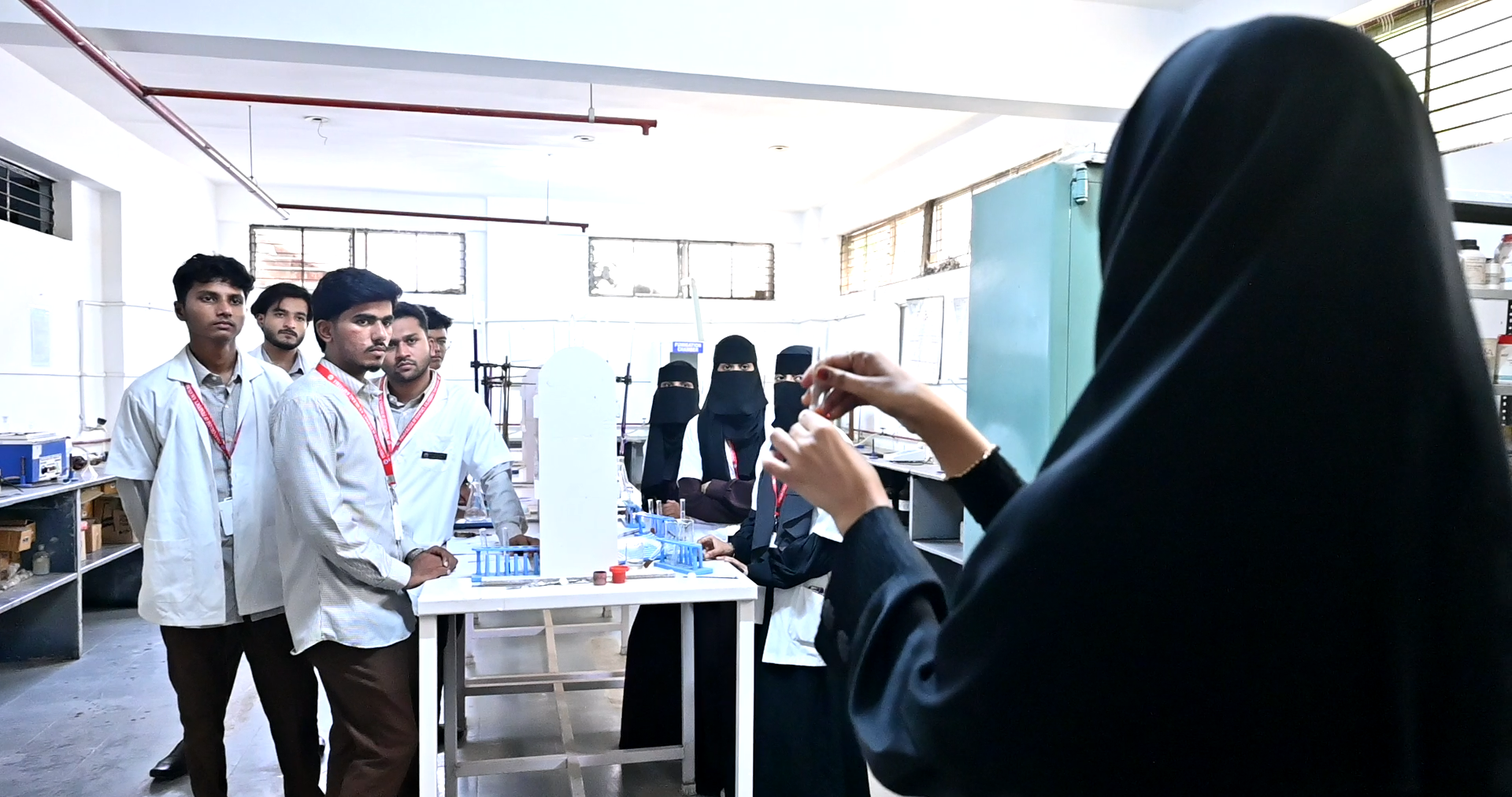
Pharmacy is learned at the bench
Under PCI's Education Regulations 2020, every core D.Pharm subject except Pharmacy Law and Ethics has its own practical course. Students attend in white coats, work at their own bench space, and are taught by faculty who demonstrate each experiment first.
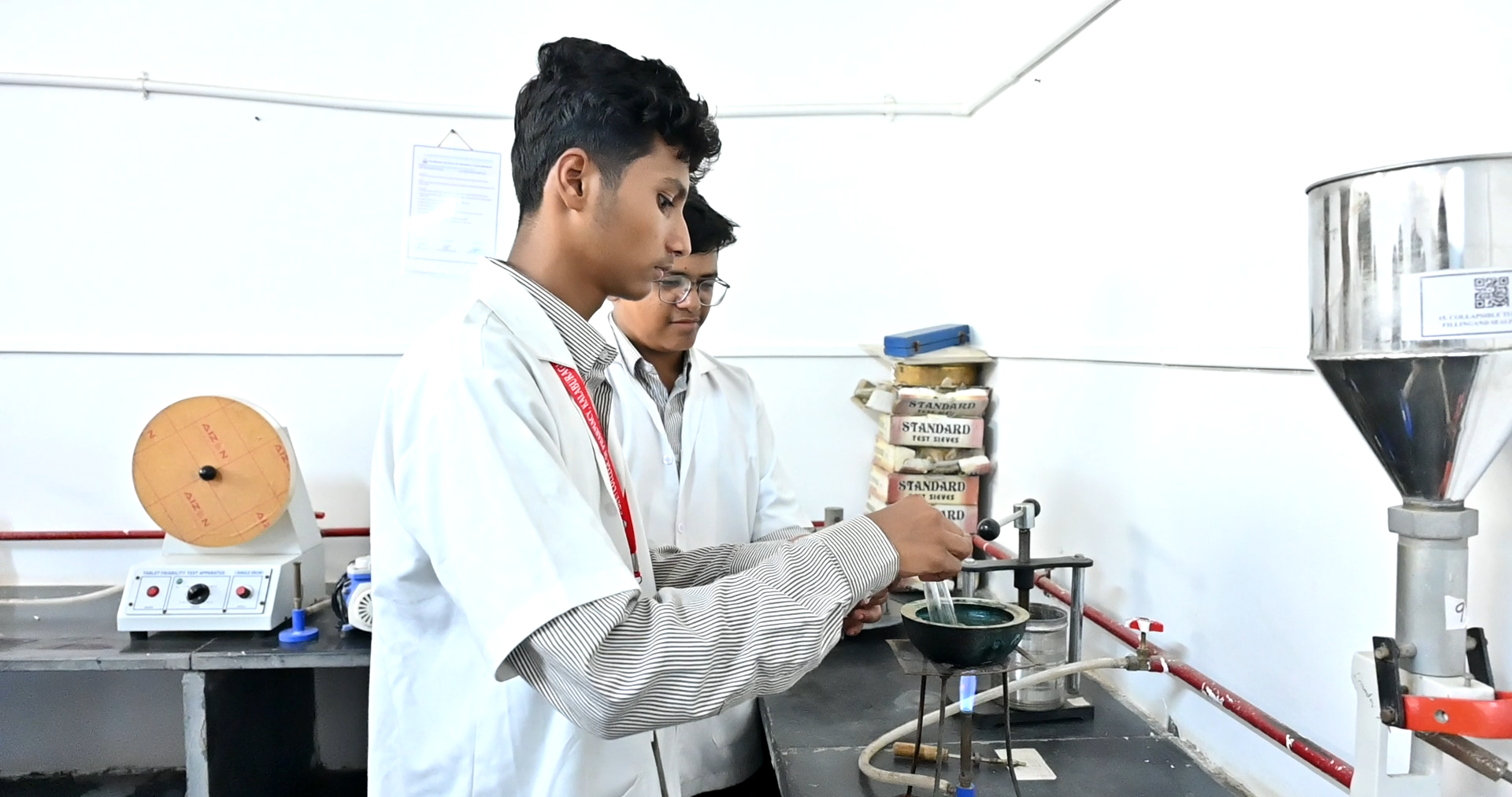
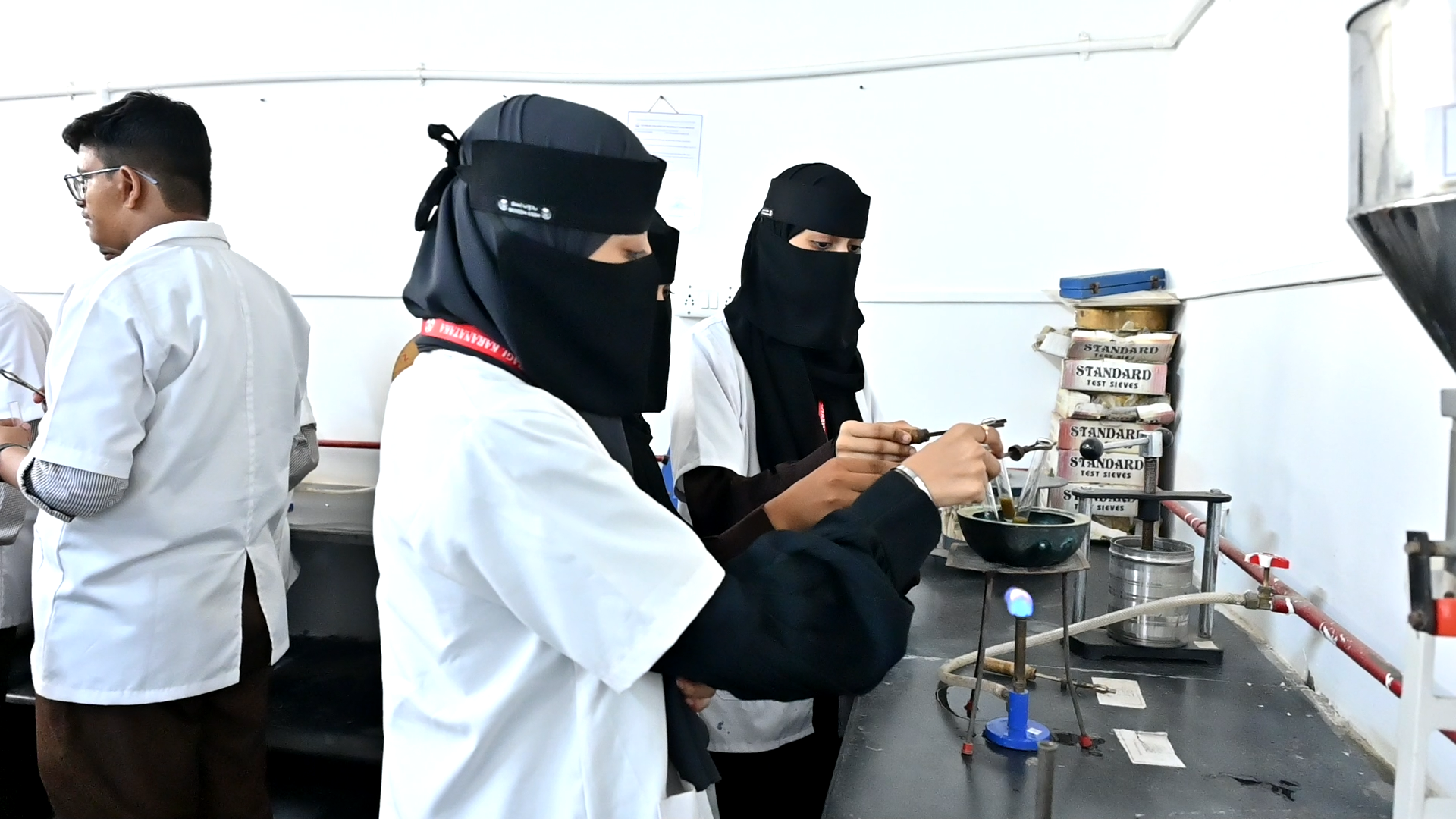
Pharmaceutics Laboratory
Where medicines are made. Students weigh, compound and prepare dosage forms, then test them the way a pharmacy or manufacturing unit would, from syrups and ointments to tablet quality checks.
Practicals students perform
- Oral liquids: syrups, elixirs and solutions
- Emulsions and suspensions
- Ointments, creams, pastes and suppositories
- Powders and effervescent granules
- Tablet quality tests such as friability
- Sieving and particle-size grading
In the laboratory
- Tablet friability test apparatus
- Standard test sieves
- Collapsible tube filling unit
- Bunsen burners and porcelain dishes
- Benches fitted with gas lines
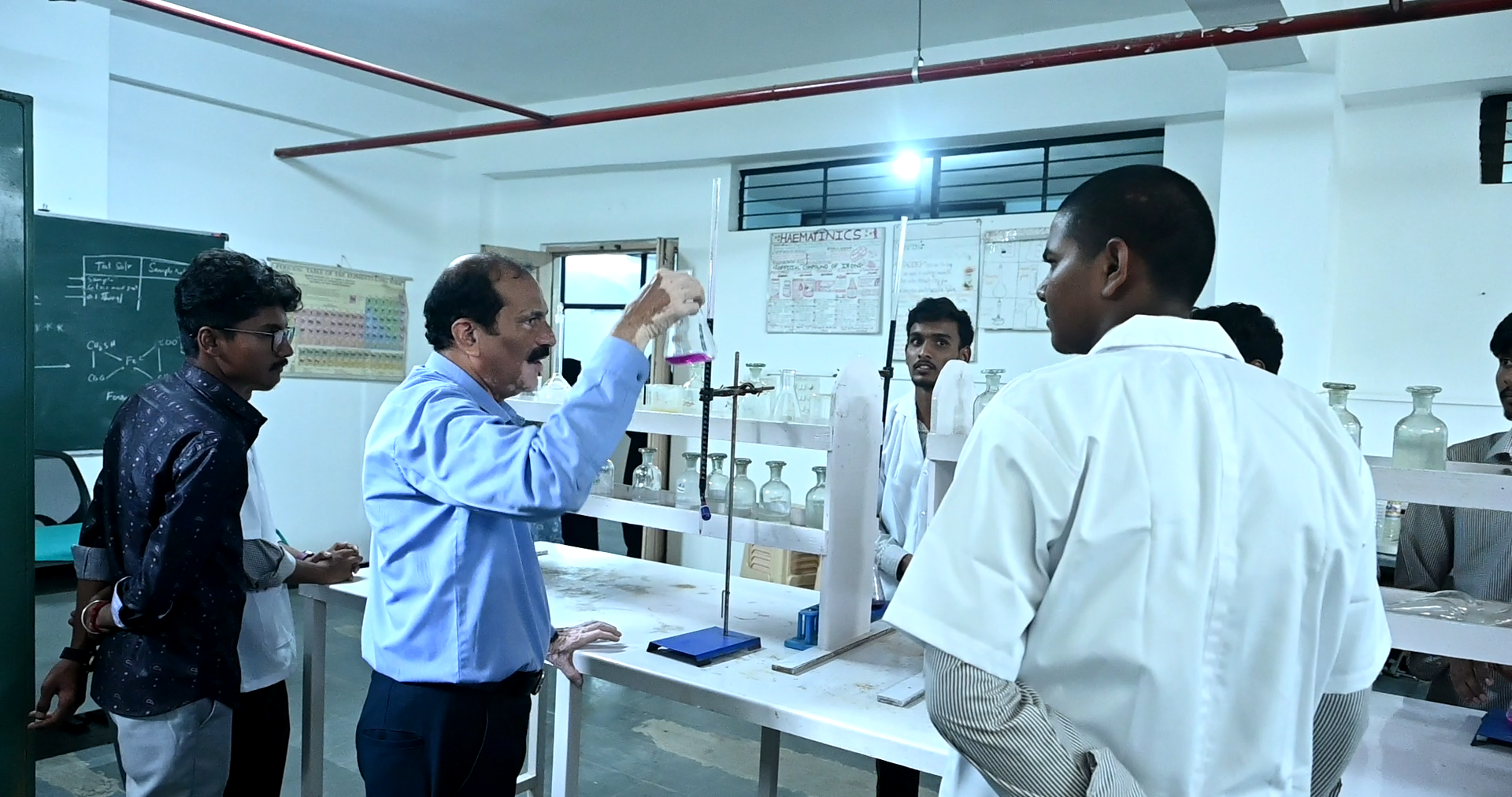
Pharmaceutical Chemistry Laboratory
Students learn how the purity and identity of a medicine are proved before it reaches a patient. Faculty demonstrate each analysis at the bench before students carry it out themselves.
Practicals students perform
- Volumetric analysis: acid–base and redox titrations
- Limit tests for chloride, sulphate and iron
- Identification tests for common drugs and ions
- Preparation of simple inorganic compounds
In the laboratory
- Burettes, pipettes and retort stands
- Reagent shelves at every bench
- Periodic table and chemistry charts
- Blackboard for worked analysis
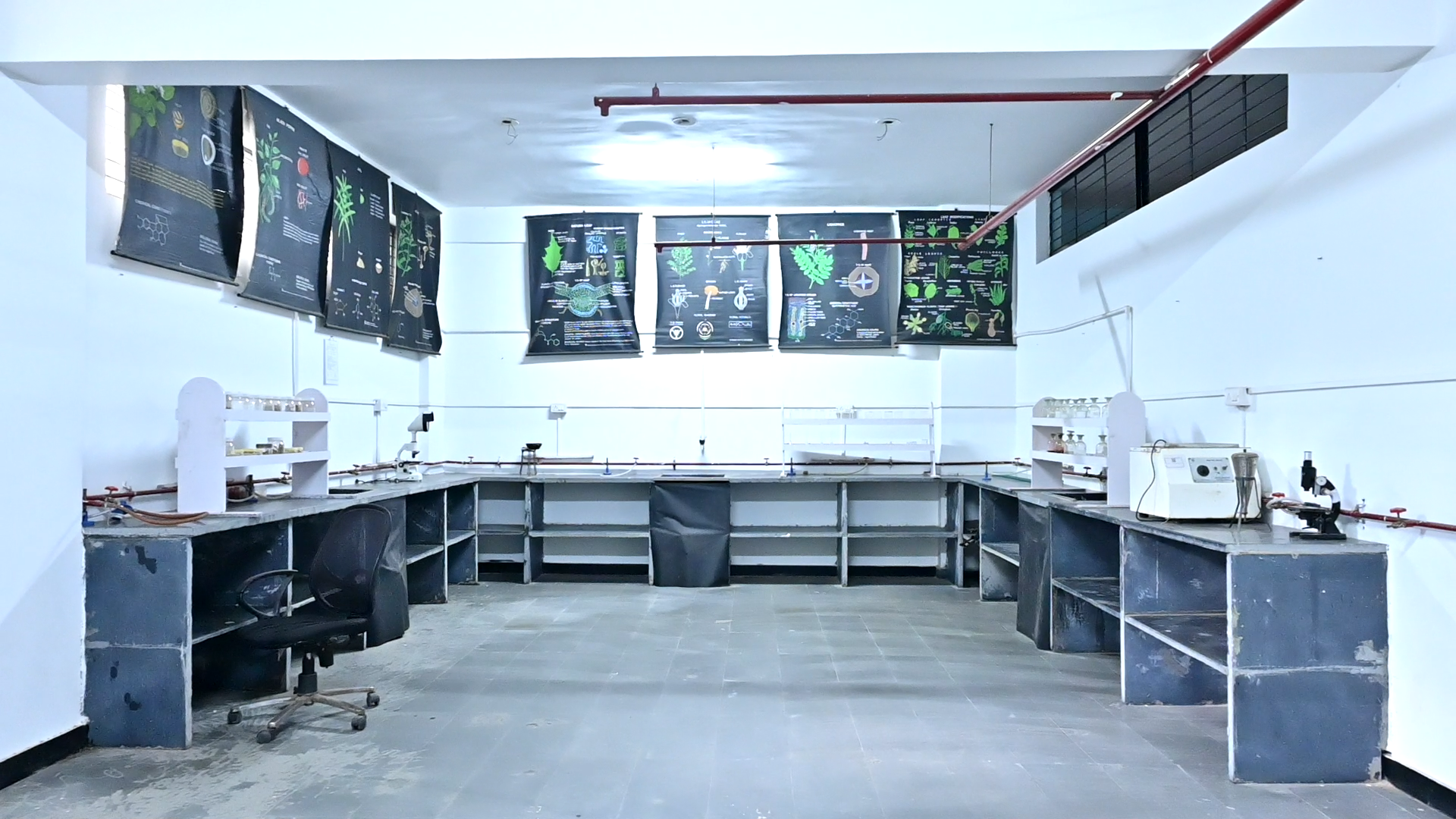
Pharmacognosy Laboratory
Medicines from nature. Students identify crude drugs by their appearance, microscopy and chemical tests, then compare them with the specimens kept in the college museum.
Practicals students perform
- Identification of crude drugs by morphology
- Microscopy of powdered drugs and plant sections
- Chemical tests for alkaloids, glycosides, tannins and more
- Study of crude drug specimens in the museum
In the laboratory
- Compound microscopes
- Reagent shelves on every bench
- Botanical wall charts
- Crude drug collection in the museum
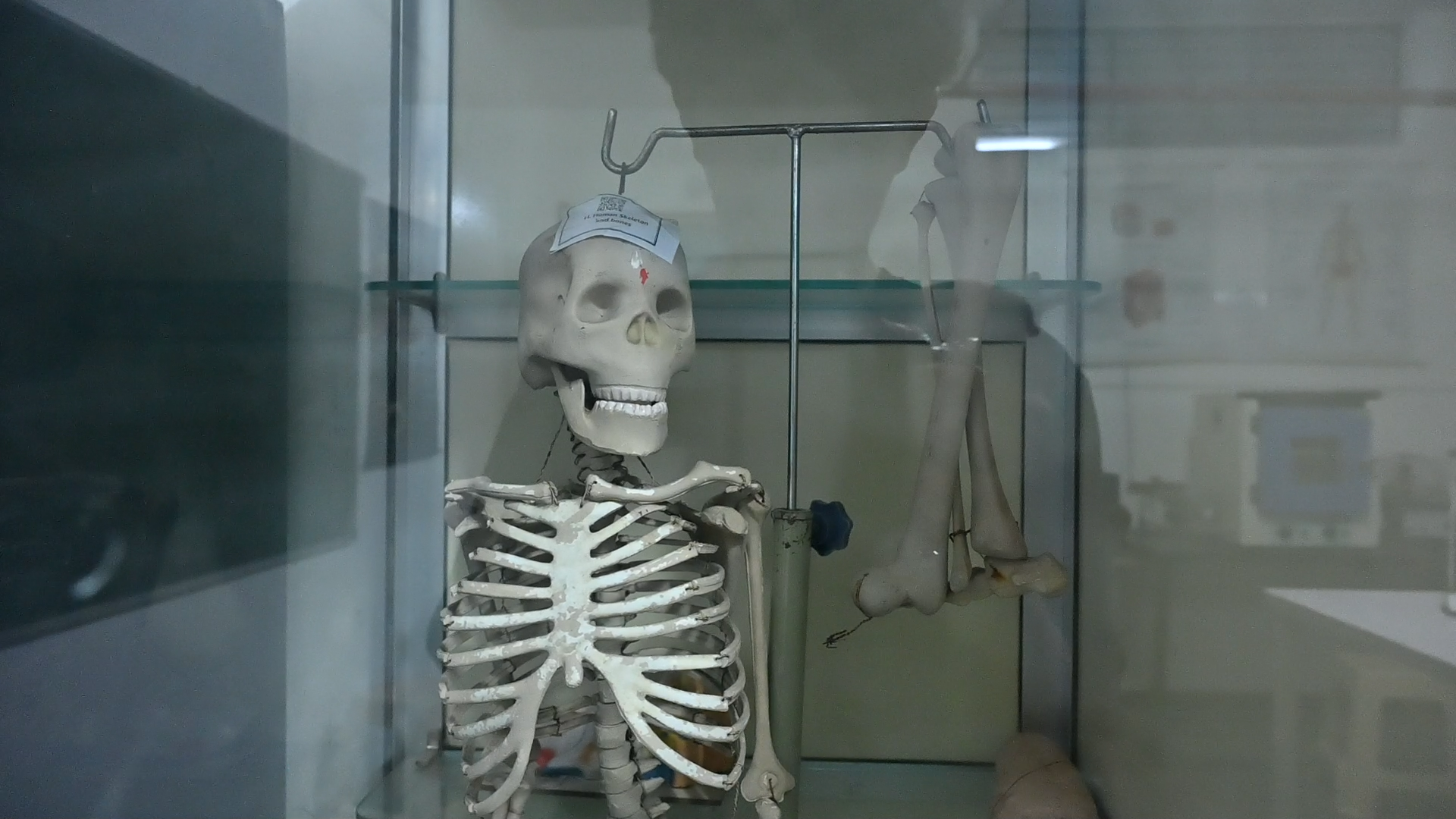
Human Anatomy and Physiology Laboratory
How the body works, the foundation for understanding how drugs act. Students study bones, tissues and body systems at the microscope, and carry out the routine tests a pharmacist should understand.
Practicals students perform
- Study of the human skeleton and bones
- Histology slides under the microscope
- Blood grouping and haemoglobin estimation
- Bleeding time and clotting time
- Recording blood pressure and pulse
In the laboratory
- Articulated human skeleton
- Compound microscopes at each bench
- Body-system and disease charts
- Anatomy models in the museum
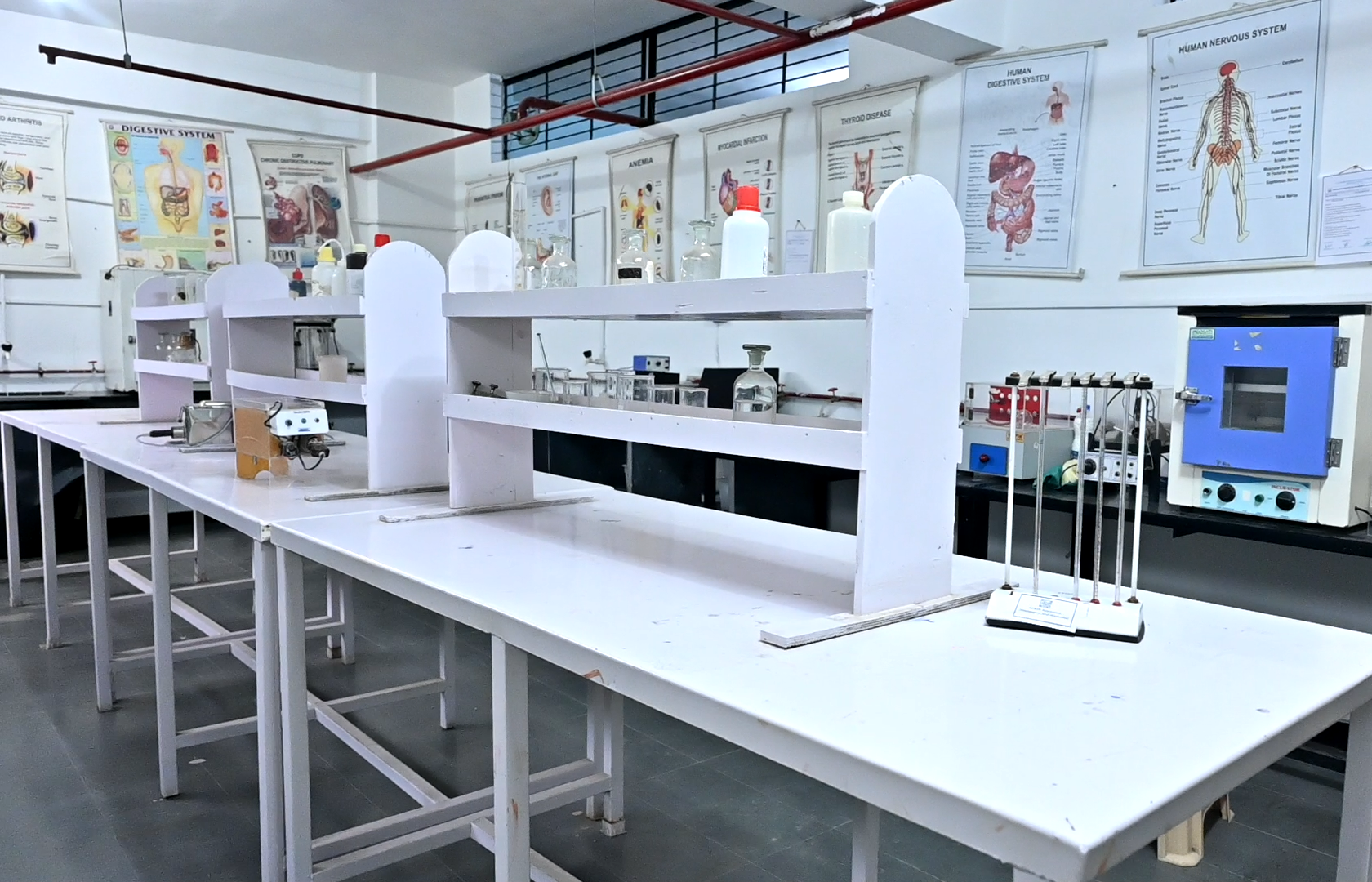
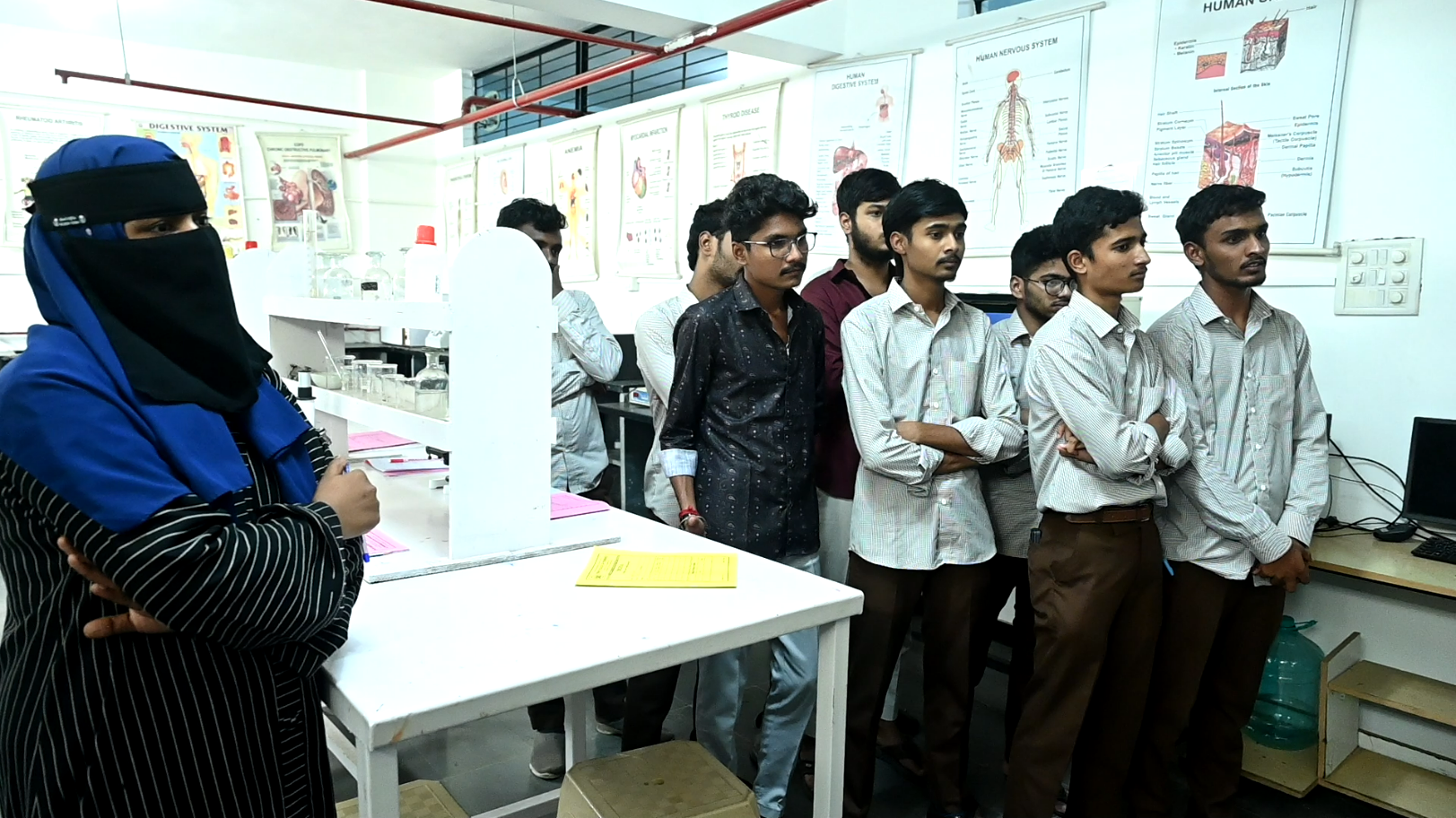
Pharmacology Laboratory
How drugs act on the body and how they are used to treat disease. Faculty take students through instruments, dosage forms and disease charts, with demonstrations and case discussions.
Practicals students perform
- Study of commonly used laboratory instruments
- Drug effects through demonstrations and computer simulations
- Case discussions on conditions such as anaemia, myocardial infarction, thyroid disease, COPD and arthritis
- Discussion of treatment for common conditions
In the laboratory
- Disease charts: anaemia, myocardial infarction, thyroid disease, COPD, arthritis
- Body-system charts: digestive and nervous systems
- Temperature-controlled laboratory cabinet
- Pipette stands, reagent racks and glassware
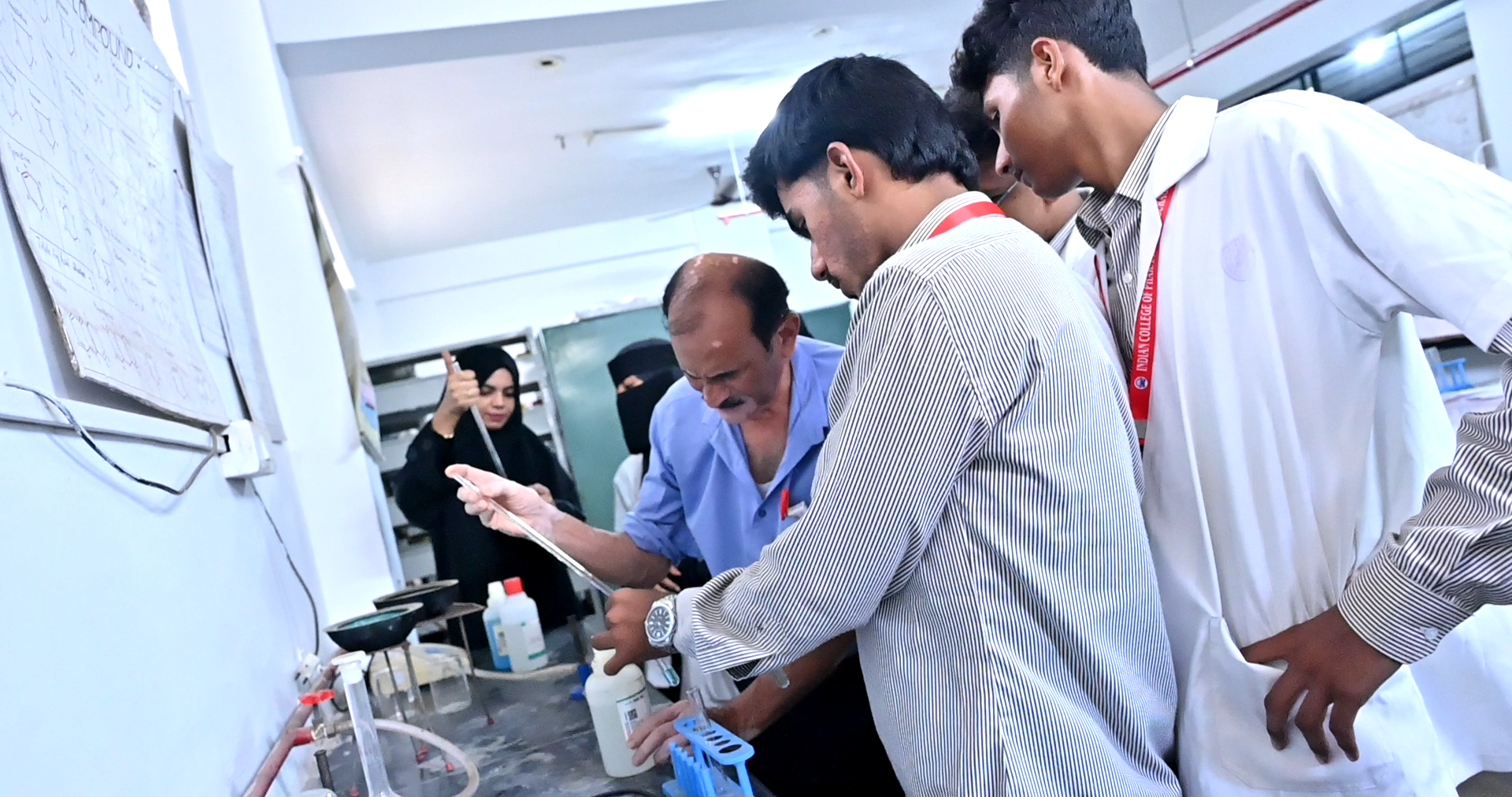
Biochemistry and Clinical Pathology Laboratory
The chemistry of the body and the laboratory tests doctors order. Students run qualitative tests under faculty guidance and learn to read the reports patients bring to the pharmacy counter.
Practicals students perform
- Qualitative tests for carbohydrates, proteins and lipids
- Analysis of normal and abnormal urine constituents
- Routine blood estimations such as glucose
- Reading clinical laboratory reports
In the laboratory
- Test tubes and reagent bottles
- Pipettes and volumetric glassware
- Wash bottles at every bench
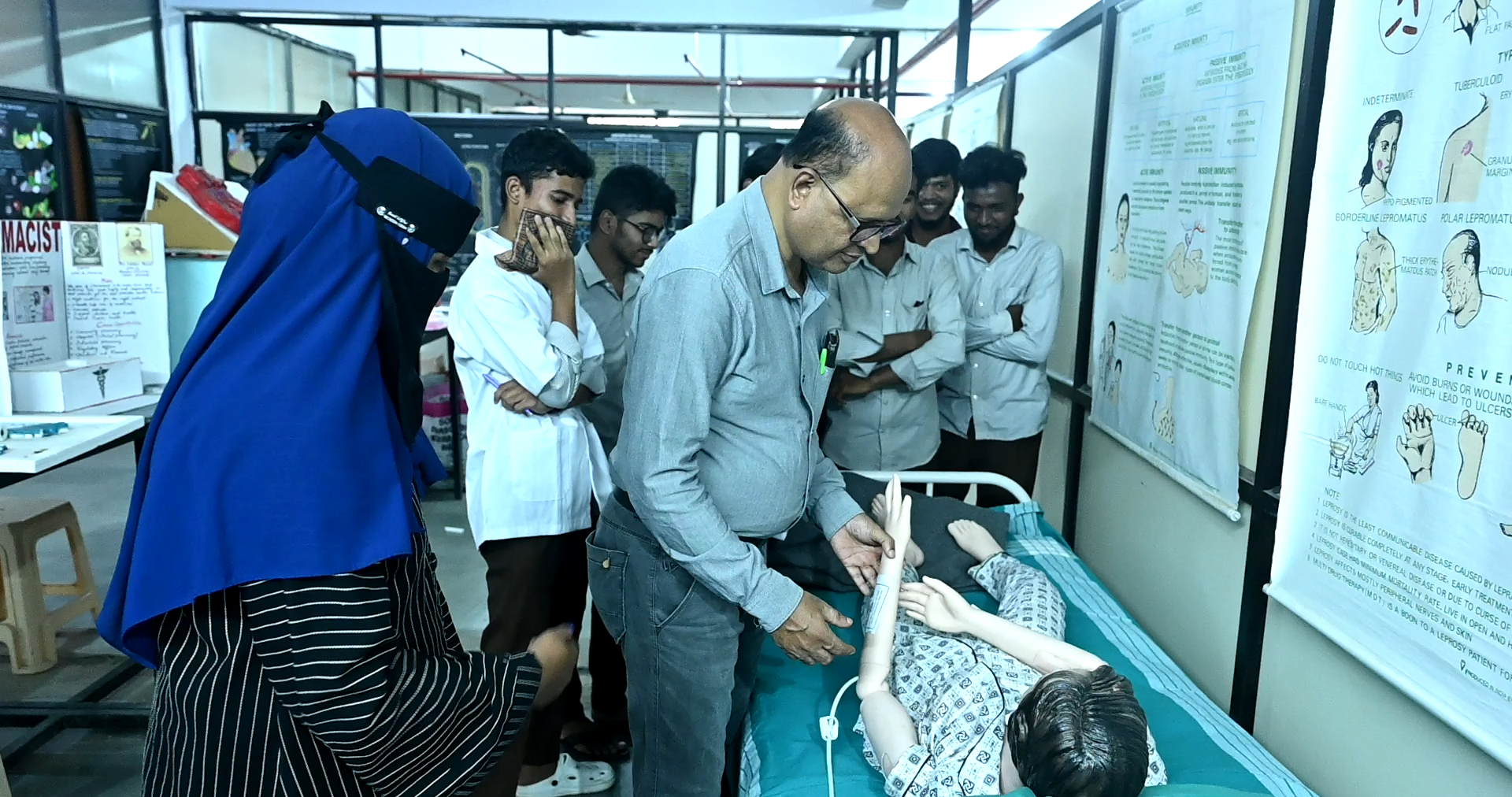
Hospital and Clinical Pharmacy Laboratory
Pharmacy practice in a hospital setting. With a hospital bed and patient-care manikin, students learn bedside care, patient counselling and public health topics before their practical training.
Practicals students perform
- Bedside demonstrations on a patient-care manikin
- Handling and reading prescriptions
- Patient counselling on medicine use
- Health awareness: communicable diseases and immunity
- First aid basics
In the laboratory
- Hospital bed with patient-care manikin
- Health education and disease charts
- Display boards on the pharmacist's role
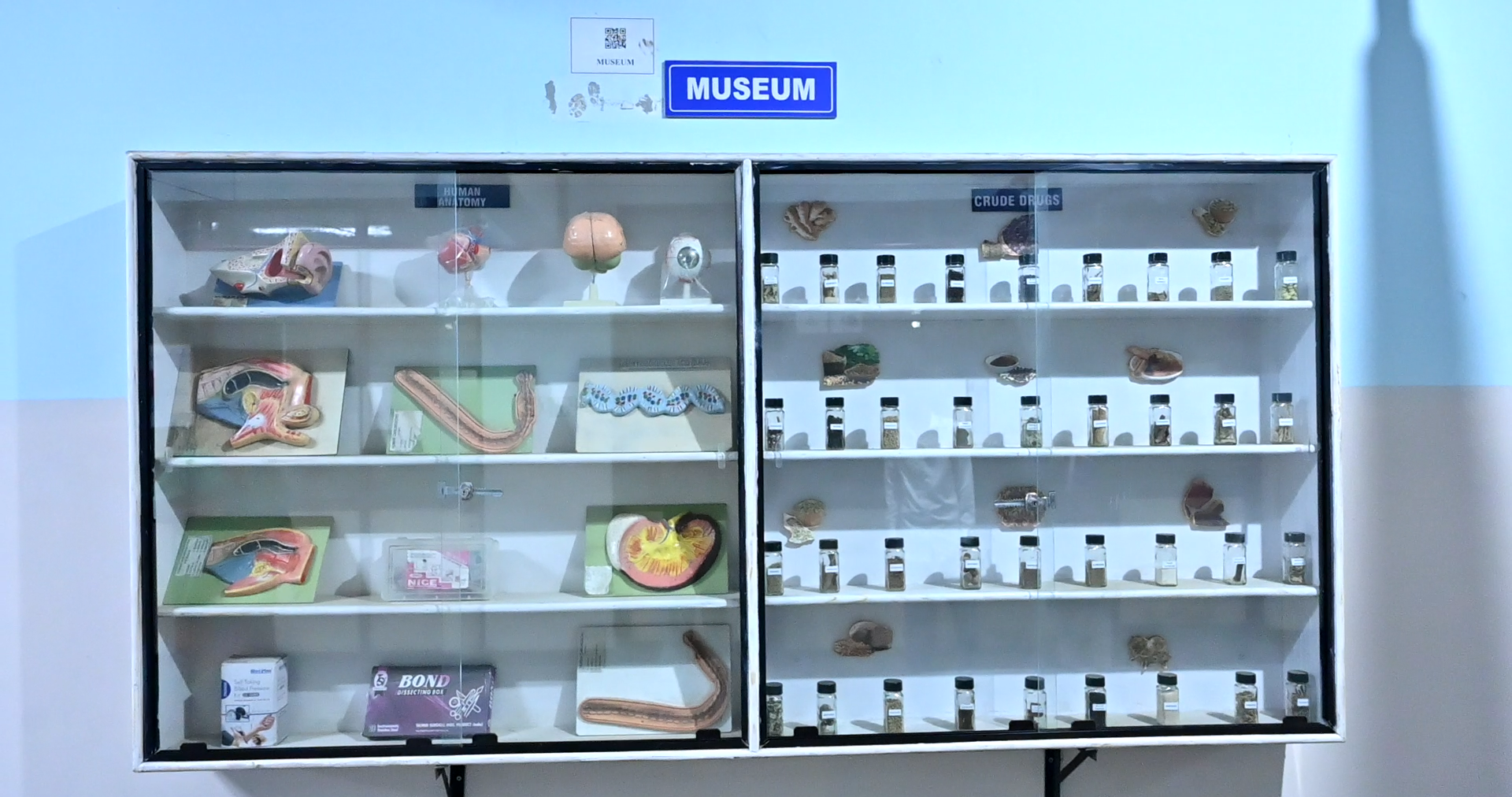
Human anatomy and pharmacognosy
College museum
A glass-fronted museum with two collections: human anatomy models used in Human Anatomy and Physiology, and labelled crude drug specimens used in Pharmacognosy. Students study them before identifying drugs and organs in practical examinations.
- Human anatomy models: brain, eye, ear, kidney and intestine
- Labelled jars of powdered crude drugs
- Whole dried crude drug specimens
- Dissecting kits
A practical session
How a practical class runs
Each practical follows the same pattern, so students build habits that carry into a working pharmacy: prepare carefully, record honestly and check the result.
Demonstration
The teacher explains the aim and shows the method at the bench before students begin.
Bench work
Students carry out the experiment themselves, in white coats, using the laboratory's equipment and reagents.
Practical record
Observations and results are written up in the practical record book, which is checked by the teacher.
Assessment
Practical skills count in sessional assessments and in the final practical examinations of Part I and Part II.
See the laboratories in person
Visit the campus with your family and walk through the laboratories before you apply.